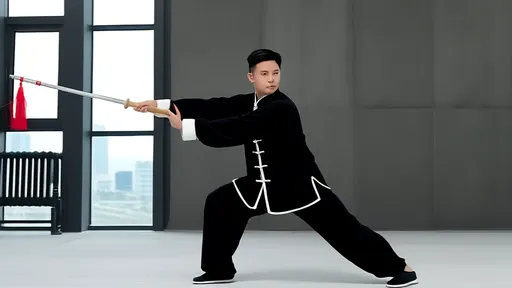
In the age of compact urban living, our homes have become multifunctional spaces where every square foot counts. The latest trend sweeping through minimalist circles transforms an unlikely household item – the humble mop handle – into a graceful tai chi practice tool. This ingenious repurposing movement isn't just about saving space; it's about reclaiming our domestic environments for personal wellness.
The concept emerged organically from apartment dwellers in dense Asian cities where tai chi practitioners struggled to find storage for traditional weapons. "I kept knocking over vases with my three-foot staff," recalls Shanghai resident Mei Lin, who first documented her mop-handle conversion on social media. "Then one morning while cleaning, I noticed the perfect weight and length of my mop's aluminum pole." Her viral post sparked thousands of creative adaptations across three continents.
Material matters in these DIY conversions. Modern mop handles typically consist of lightweight aluminum or fiberglass – materials that coincidentally mirror premium tai chi weapons. The hollow construction provides ideal flexibility for flowing movements while remaining sturdy enough for basic form practice. Traditionalists might scoff at the idea, but several tai chi masters have endorsed the concept for beginners exploring the art form's weapon routines.
Beyond mere convenience, this trend speaks to a deeper cultural shift. Our living rooms have become gyms, offices, and meditation spaces. The mop-handle-turned-staff symbolizes how contemporary wellness practices adapt to spatial constraints. "It's not about compromising quality," explains movement coach Javier Mendez. "It's about recognizing that profound practice can happen anywhere – even with cleaning supplies."
Safety considerations remain paramount when repurposing household items. Experts recommend thoroughly cleaning handles, checking for sharp edges, and ensuring secure grip surfaces. Some enthusiasts wrap handles with tennis racket tape for better control during spinning techniques. Weight can be adjusted by filling hollow poles with sand or rice for those desiring more substantial resistance.
The psychological benefits of this spatial alchemy shouldn't be underestimated. There's something profoundly satisfying about transforming mundane objects into tools for personal growth. Toronto psychologist Dr. Naomi Chen observes: "When we repurpose everyday items for self-care rituals, we're rewiring our brains to find potential everywhere. That mop in your closet isn't just for spills – it's a gateway to mindfulness."
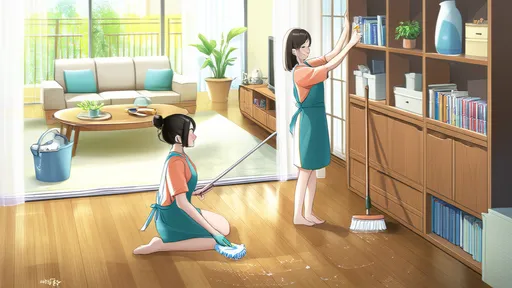
Practical storage solutions have evolved alongside this trend. Wall-mounted brackets originally designed for brooms now display these hybrid tools as decorative elements. Some practitioners stain wooden handles or decorate them with meaningful symbols, blurring the line between utility and art. The cleaned mop head often finds new life as a dusting tool, completing the cycle of purposeful reuse.
Community workshops have sprung up teaching proper conversion techniques alongside basic tai chi forms. These gatherings foster connections between cleaning enthusiasts, martial artists, and interior designers – unlikely collaborators united by spatial creativity. The movement has even inspired furniture designers to create multipurpose household items with wellness applications in mind from the initial blueprint stage.
As urban populations grow and living spaces shrink, such ingenious adaptations will likely proliferate. The mop-handle tai chi staff represents more than clever space management – it embodies a philosophy where every object contains hidden potential, and every square foot can serve multiple purposes. In our crowded world, perhaps the ultimate luxury isn't more space, but more imagination in using what we already have.
By /Aug 6, 2025
By /Aug 6, 2025
By /Aug 6, 2025
By /Aug 6, 2025

By /Aug 6, 2025
By /Aug 6, 2025
By /Aug 6, 2025
By /Aug 6, 2025
By /Aug 6, 2025

By /Aug 6, 2025

By /Aug 6, 2025
By /Aug 6, 2025
By /Aug 6, 2025
By /Aug 6, 2025
By /Aug 6, 2025

By /Aug 6, 2025
By /Aug 6, 2025

By /Aug 6, 2025

By /Aug 6, 2025

By /Aug 6, 2025